Coping with the Fear of Being Put on the Spot on Calls
We’ve all been there. The meeting is humming along, and then… silence. The host’s eyes scan the Brady Bunch grid. "Hey, [Your Name], what are your thoughts on this?" Cue internal panic. Your heart does a little tap dance. Your mind goes from a supercomputer to a blank, blue screen. Here’s the thing: that feeling is 100% real. But the story your brain is telling you? That you’re under a massive, unforgiving spotlight and everyone is judging your every stammer? It’s mostly fiction. In a virtual space, people are checking their email, making lunch, or worrying about their own turn. The spotlight is a phantom.
Stop Staring At Yourself (Seriously, Hide That Window)
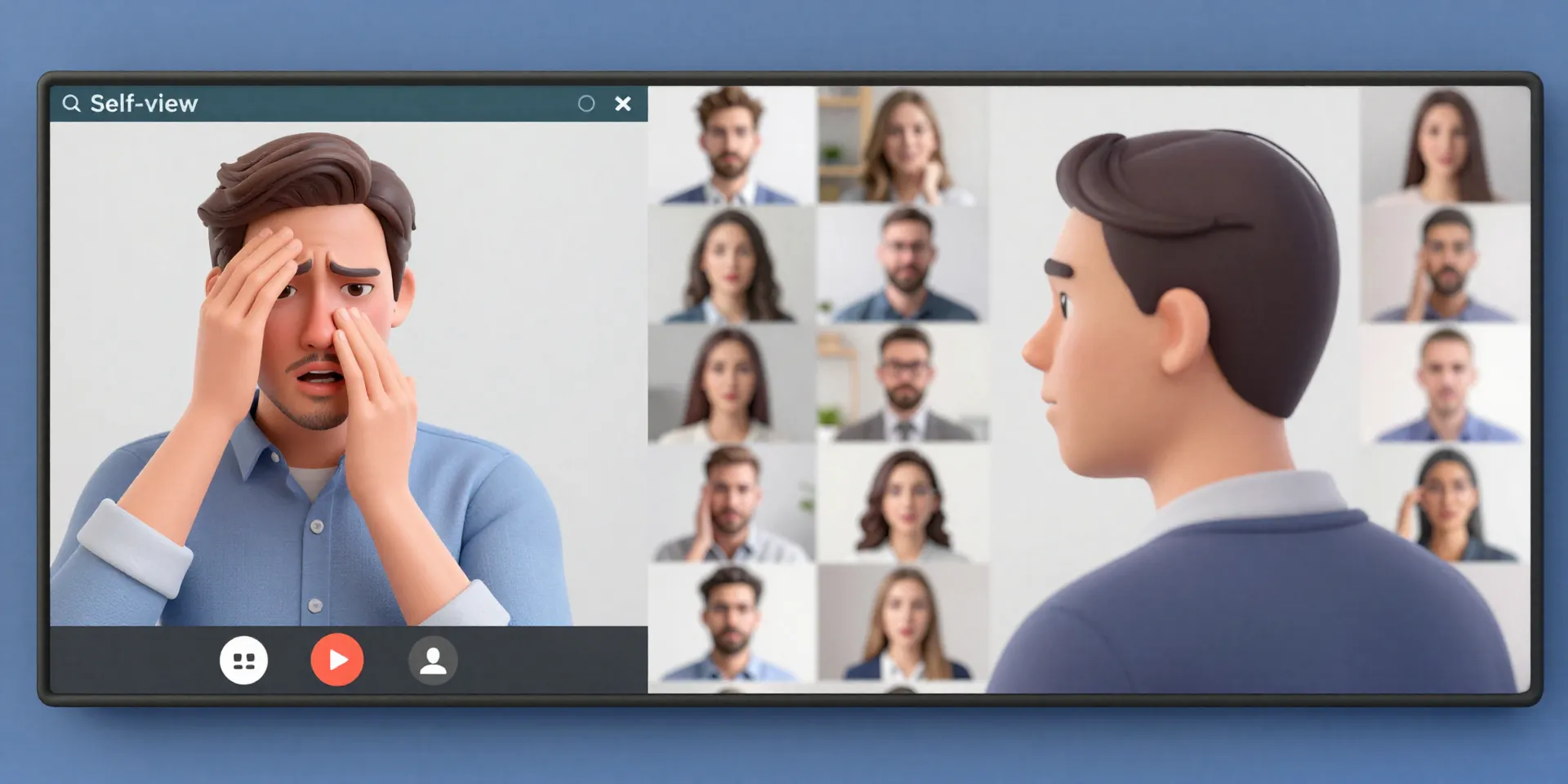
This is the single dumbest feature of video calls. That little rectangle of your own face, staring back at you. It’s a vanity mirror in the middle of a boardroom. You wouldn’t sit in an in-person meeting holding a mirror up to critique your eyebrows, right? So stop doing it virtually. Hide self-view. Immediately. Your job is to listen and contribute, not to monitor your own expression for flaws. It forces your focus outward. You start actually hearing what people are saying instead of scripting your next line in your head. It’s a tiny change with a massive psychological payoff.
Prep Isn't Cheating, It's Your Armor

Walking into a meeting cold is just asking for anxiety to take the wheel. But I’m not talking about a 10-page script. That’s overkill. I mean having three bullet points. Just three. Before the call, ask yourself: "What’s the one thing I want to understand by the end?" and "What’s the one piece of information I absolutely must share?" Jot those down. Now you have an anchor. If you get put on the spot, you have a home base to return to. It’s not about having perfect answers. It’s about having *a* direction to point your brain when it tries to flee the scene.
Curate Your Battle Station
You feel exposed because, in a way, you are. You’re broadcasting a slice of your private space. So take control of it. Angle your camera. Find your light (a window is your best friend). Put something behind you that makes you feel smart or calm—a bookshelf, a plant, a nice poster. Not a blank wall. A blank wall feels like an interrogation room. This isn’t vanity. It’s about creating a physical environment that subconsciously tells you, "I’m in my space. I’m safe here." It reduces the feeling of being beamed, unprotected, into a foreign digital dimension.
The Low-Stakes Rehearsal No One Talks About
You get better at the things you practice. This isn’t rocket science. But practicing for a high-pressure call is hard. So don’t. Practice on the easy ones. Got a casual catch-up with a colleague? Use it as a drill. Challenge yourself to unmute and say one thing without overthinking it. Call a friend on video instead of texting. The goal isn’t eloquence. The goal is to rewire the connection in your brain that says "video call = danger." You’re building the muscle memory of speaking into the void and having it be… fine. Actually, sometimes even pleasant.
The Brutal, Liberating Math of It All
Let’s do some quick math. In a 60-minute meeting with 10 people, if time were split perfectly, you’d talk for 6 minutes. It’s never split perfectly. You might talk for 2. The chances of you being the one person put on the spot at any given moment are statistically tiny. We catastrophize the probability. We think it’s a 90% chance of humiliation. It’s more like 2%. You are worrying about a ghost. A very loud, convincing ghost, but a ghost nonetheless. So breathe. The numbers are on your side. The next time that flutter of fear starts, just remember the pie chart. You’re probably going to be just a silent slice. And that’s perfectly okay.